

What is Trucking Logistics and Why Does it Matter for Your Business?
Road transport handles most of Singapore’s domestic freight movement. Whether cargo is moving from a port container yard to a distribution hub, or from a central warehouse to a retail shopfront, commercial vehicles bridge the critical gaps in the local supply chain.
For business owners and fleet operators, trucking logistics is the system behind those vehicles. It governs the critical decisions of what gets loaded, when, into which vehicle class, via what route, and at what cost. Optimizing this system directly influences your delivery SLA (Service Level Agreement) compliance, vehicle uptime, and bottom-line scalability.
What is the Meaning of Trucking Logistics?
While often used interchangeably, transportation and trucking logistics serve different functions. Transportation is the physical movement of goods from point A to point B. Logistics is the management layer around it.
- Transportation: The physical movement of freight from Point A to Point B. It is purely the execution layer.
- Trucking Logistics: Trucking logistics is defined as the planning, coordination, and execution of freight movement using road-based vehicles. It covers route optimization, load scheduling, driver management, fleet oversight, and regulatory compliance across the entire transport operation.
What Does a Trucking Logistics Company Do?
A logistics trucking company manages the supply chain processes that get goods from origin to destination. This covers route planning, carrier coordination, shipment tracking, driver scheduling, compliance management, and fleet performance oversight.
Commercial logistics structures generally fall into one of two operational categories:
- Asset-Based Operators: They own their fleet outright and handle transport directly with their own vehicles and drivers. For Singapore SMEs and logistics operators who have built their own delivery operations, this is the standard model.
- Freight Brokers: Freight brokers arrange shipments by coordinating with third-party carriers. They do not own vehicles themselves but use carrier networks and technology to match loads with available capacity. This model suits businesses that do not want to invest in fleet ownership but still need managed freight services.
How Trucking Logistics Works in Practice
The operational cycle of a truck logistics operation typically runs through six stages:
- Order intake establishes the delivery volume, cargo type, weight, and time windows for a given run.
- Route assignment maps those deliveries against vehicle availability and road conditions.
- Load planning determines how cargo is distributed across available vehicles to maximize payload utilization without exceeding weight limits.
- Driver dispatch releases vehicles into operation.
- On-road monitoring tracks progress in real time.
- Delivery confirmation closes the loop and feeds data back into scheduling for the next cycle.
The country’s road network introduces specific considerations at the route assignment and on-road stages. Urban density, restricted heavy-vehicle hours, and the short distances between commercial and residential zones mean route optimization carries more operational weight here than in markets with longer hauls.
A poorly routed run costs more than time; it increases energy consumption per kilometer and raises the risk of missing delivery windows during peak hours.
Navigating LTA Vehicle Classifications
Land Transport Authority (LTA) vehicle classifications also factor into logistics trucking planning.
- Light Goods Vehicles (LGVs): Have a maximum laden weight (MLW) of up to 3,500 kg and carry no special driving license restrictions for Class 3 holders.
- Heavy Goods Vehicles (HGVs): MLW from 3,501 kg to 16,000 kg. Subject to additional parking requirements, blind spot safety provisions, and movement permit conditions.
- Very Heavy Goods Vehicles (VHGVs): MLW above 16,000 kg. Require further compliance steps, including police escorts for vehicle heights above 4.5 meters.
Misallocating a heavy load to an incorrect vehicle class compromises on-road safety and can result in severe regulatory non-compliance.
Why Vehicle Selection is Central to Logistics Efficiency
Fleet capability determines what a trucking logistics operation can deliver. The payload capacity sets the maximum weight that each run can carry, while vehicle dimensions and weight classifications dictate which roads and loading bays can be accessed.
Additionally, operating costs per kilometer determine whether the economics of each run hold up at scale. No amount of route-planning or scheduling software can compensate for a vehicle that does not fit the job.
Diesel has historically been the largest controllable cost variable in goods vehicle fleets. Singapore’s Green Plan 2030 sets a clear trajectory toward 100% cleaner-energy vehicles by 2040. New diesel vehicle registrations were phased out from 2025. Logistics operators evaluating fleet decisions now face a practical choice: ICE vehicles with a closing registration window, or electric trucks and electric vans with improving cost economics and direct policy support.
The Commercial Vehicle Emissions Scheme (CVES) provides incentives of up to S$20,000 for clean commercial vehicles, with surcharges applied to high-emission models. For fleet managers who manage the total cost of ownership across multiple vehicles, transitioning to electric trucks and vans is quickly becoming a practical choice.
The vehicle class required varies by logistics role. Hong Seh Motors, Singapore’s authorized distributor for DFSK, SRM, Farizon and other commercial electric vehicles, covers each of the main categories:
- Light Last-Mile And Urban Delivery: The DFSK EC35 is a cargo van suited to high-frequency urban runs. The DFSK EC31 is a more compact option for tighter routes and lighter loads. Both are CVES Band A-rated.
- Temperature-Controlled Logistics: The DFSK EC31 Freezer Truck combines the compact footprint of the EC31 with integrated refrigeration, making it a practical option for last-mile food delivery and pharmaceutical distribution routes.
- Medium-Duty Urban Freight: The SRM T3EV+ is a 10ft electric lorry with a payload of up to 1,900 kg and a range of up to 355 km on a single charge.
- Heavy-Duty Inter-Hub and Industrial Haulage: Two 14ft electric trucks cover this category. The Farizon H5E offers a payload of up to 2,300 kg, designed for large-scale commercial transport. The Chenglong L2 EV carries a higher payload of approximately 2,510 kg, with a range of up to 350 km and 120 kW DC fast charging.
Choose the Right Fleet for Your Logistics Operation with Hong Seh Motors
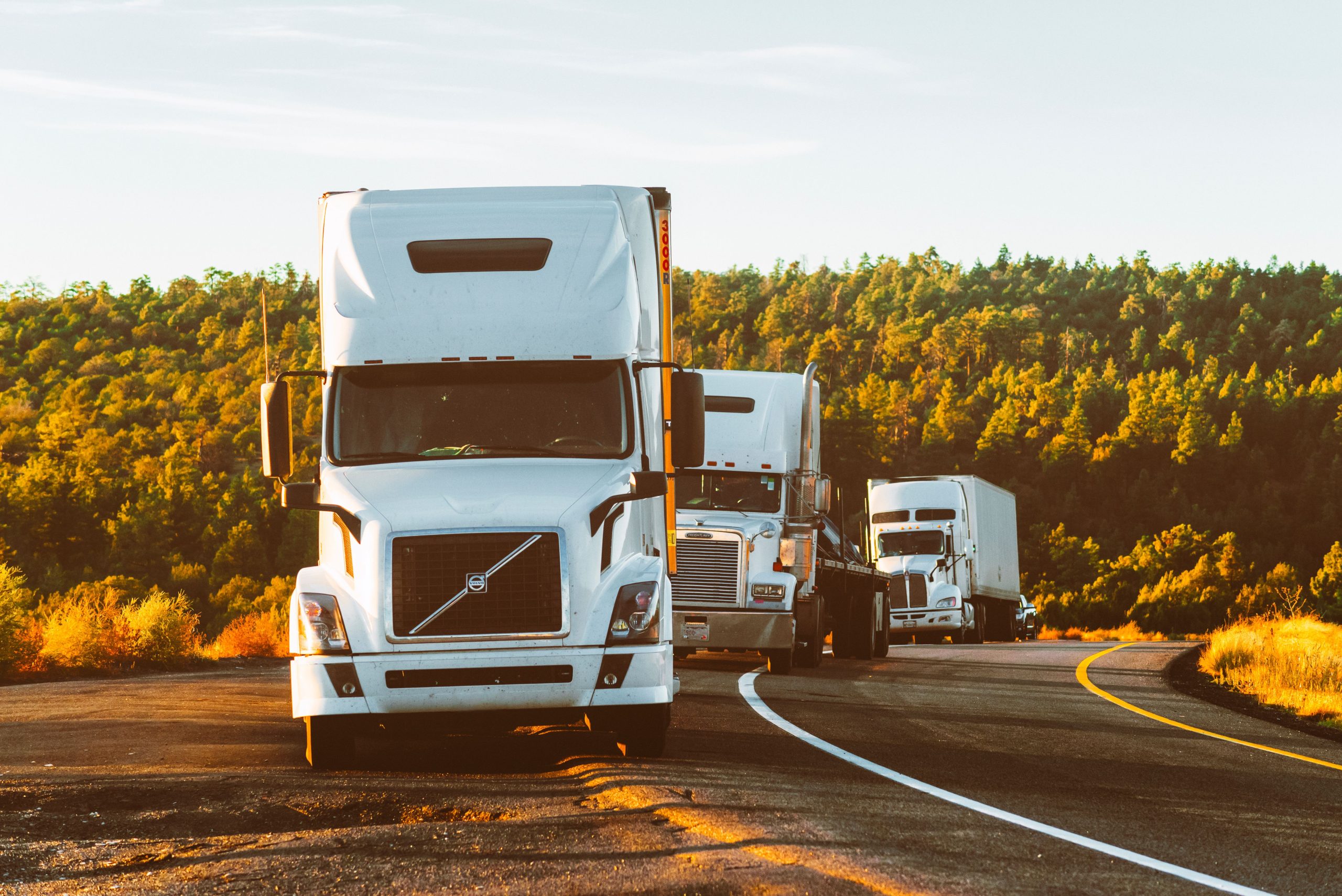
Effective trucking logistics requires an efficient operational system and a fleet capable of executing it. Without the right vehicles, even well-planned routing and scheduling leave gaps.
Hong Seh Motors covers both LGV and HGV categories, with a full electric lineup spanning cargo vans, freezer trucks, medium-duty lorries, and heavy-duty configurations. All vehicles come with warranty coverage and access to in-house after-sales support.
To find the right commercial electric vehicle for your specific logistics requirements, contact Hong Seh Motors today. We can match vehicle specifications to your cargo type, route profile, and operational cycle, and walk through the applicable incentive schemes before you commit.
Comments are closed