
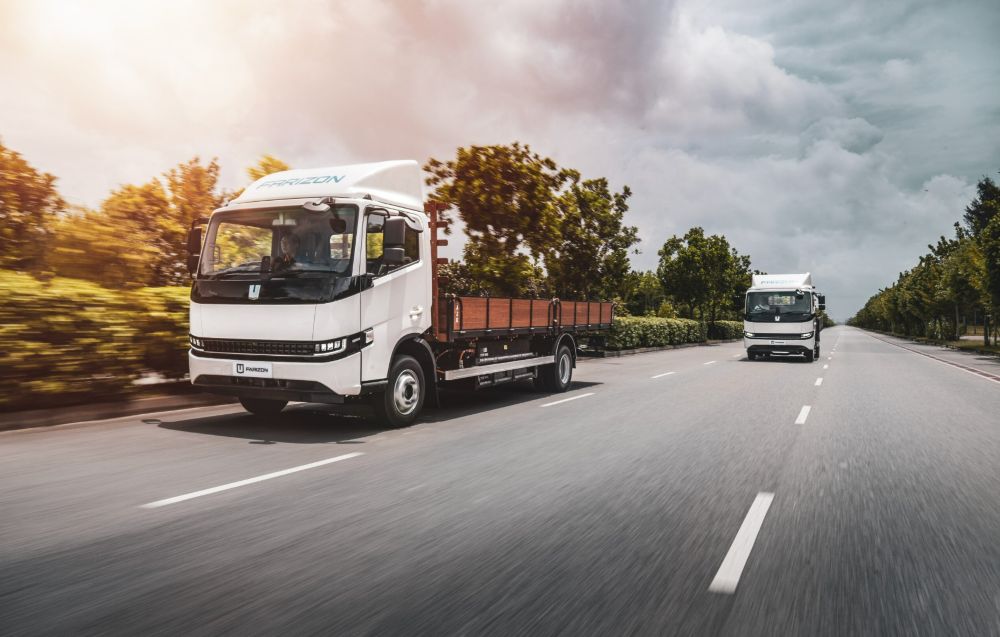
What is a Flatbed Truck? Uses and Benefits for Commercial Fleets
Across construction, manufacturing, and port-adjacent operations, flatbed trucks handle freight that enclosed vehicles simply cannot. They’re used for oversized steel, heavy machinery, prefabricated panels, and industrial equipment that either exceeds standard cargo dimensions or requires loading by crane or forklift from the side.
For fleet managers and logistics operators, having the right open-deck configuration means fewer constraints on what you can carry, how it is loaded, and how efficiently your vehicles turn around on-site.
Flatbed Truck Meaning: Design and Key Features
A flatbed truck can be a commercial electric or diesel vehicle with a flat, open-deck load platform that has no fixed sides or roof. This design allows cargo to be loaded from any direction without the dimensional constraints of a box or curtain-sided body.
The deck is typically steel-framed and rated for heavy payloads. Tie-down hooks also run along the perimeter of the platform, and cargo is secured using strapping systems, chains, and in some configurations, removable side stakes.
What are Flatbed Trucks Used For?
Flatbed trucking generally applies to the transport of heavy, oversized, or irregularly shaped cargo. Since these sectors usually handle specialized cargo, they benefit from using open-deck trucks:
- Construction and Infrastructure: Steel rebar, concrete formwork, scaffolding, prefabricated panels, and heavy equipment that exceed standard cargo height or cannot be maneuvered through enclosed trailer doors.
- Manufacturing and Industrial: Machinery components, fabricated steel structures, and factory equipment requiring crane offloading at the destination, where side or overhead access is essential.
- Port and Inter-Hub Logistics: Container yard moves, machinery relocation between facilities, and oversize permit loads that involve non-standard dimensions.
- Public Works and Utilities: Pipes, cable drums, and large-format infrastructure materials that are too long or too heavy for standard enclosed configurations.
Flatbed vs. Enclosed Trucks: Choosing the Right Configuration
While flatbeds offer loading flexibility and no fixed size constraints, enclosed trucks protect cargo from the weather and reduce the burden of securing every load. For construction, industrial, and infrastructure operators, the flatbed’s open-deck design is not a limitation but a practical requirement given the nature of what you move.
Enclosed trucks are the more appropriate choice for these:
- Fragile or High-Value Goods: Cargo that cannot tolerate weather exposure, road spray, or the physical contact involved in open-deck securing.
- Temperature-Sensitive Freight: Refrigerated or climate-controlled loads that require a sealed environment throughout transit.
- High-Frequency Palletized Operations: Standardized pallet freight moving between warehouse docks, where enclosed rear loading is faster and more consistent than open-deck rigging.
Flatbed Trucking Considerations in Singapore
In Singapore, electric lorries and open-deck trucks perform the equivalent function to flatbed trucks in larger markets. Under the Land Transport Authority’s classification framework, goods vehicles fall into light goods vehicle (LGV) or heavy goods vehicle (HGV) categories based on maximum laden weight (MLW), with HGVs covering vehicles with MLW from 3,501 kg to 16,000 kg.
Operators carrying oversized loads must comply with LTA requirements governing load width, height, and securing. Loads that exceed standard dimension limits require an Oversized Vehicle Movement (OVM) permit from the LTA. Whether it’s a diesel or commercial electric vehicle, if its height exceeds 4.5 meters, it will require a police escort.
The Farizon H9E & H5E: Hong Seh’s Heavy-Duty Electric Options for Flatbed Operations
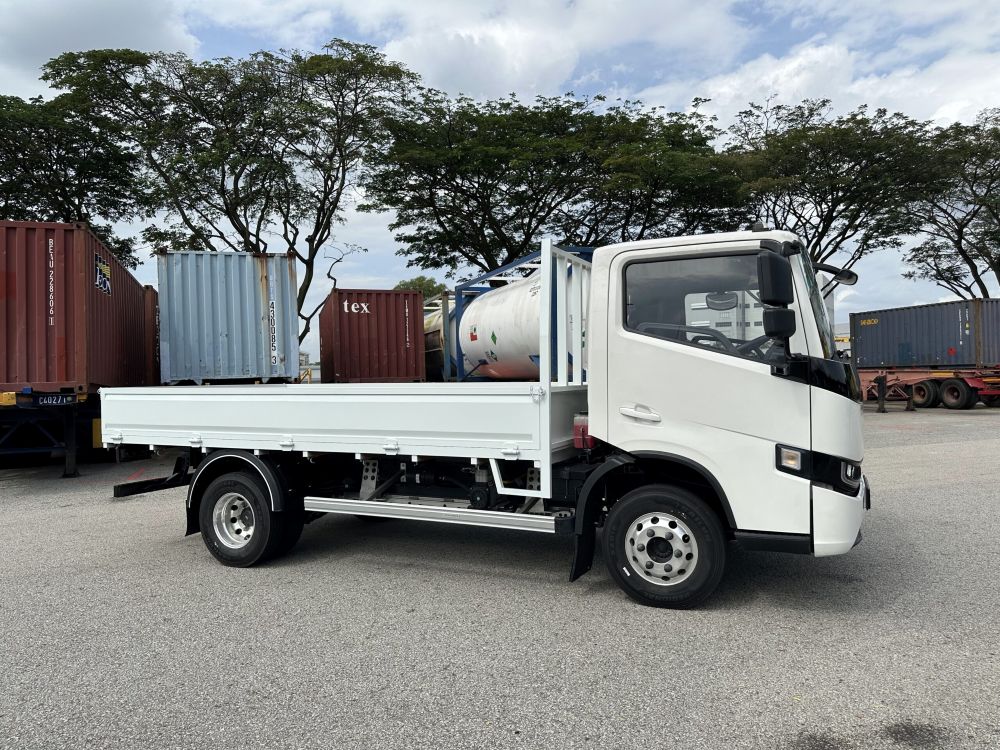
For operators in construction, industrial, and infrastructure sectors considering electric trucks, Hong Seh Motors distributes two Farizon models in open-deck configuration:
- Farizon H9E (14ft Short Wheelbase): This heavy-duty electric truck has a payload capacity ranging from 1,227 kg to 4,615 kg, depending on the variant. It charges from 20% to 80% in less than 40 minutes, making it suitable for demanding urban construction logistics, port moves, and industrial freight.
- Farizon H5E (14ft): This 5-ton electric truck has a 2,300 kg payload and a WLTP range of 344 km on a single charge. DC fast charging brings it from 20% to 80% in approximately 30 minutes, covering mid-weight construction logistics, distribution, and project freight.
Transition to an Electric Open-Deck Fleet
As a fleet manager or operator in construction, manufacturing, and industrial haulage, your ideal flatbed truck will be one that fits your routes, payload capacity needs, and operating cost structure throughout the full vehicle lifecycle. If you are still evaluating your fleet configuration, our guide to the most common types of delivery trucks in Singapore explains how each vehicle type aligns with different operational needs.
And once you transition your open-deck operations to electric, you’re aligning your fleet with the requirements of Singapore’s Green Plan 2030. At the same time, you’re reducing fuel costs on the heavy-haul routes where diesel expenditure accumulates fastest.
For operators currently running diesel open-deck lorries, the Farizon H9E offers a commercially available electric alternative with payload capacity and range to handle those routes today.
As the authorized distributor of the Farizon H9E and H5E, Hong Seh Motors offers in-house after-sales support for heavy commercial operators in Singapore. Contact Hong Seh Motors to learn more about the Farizon H9E and H5E and how they fit your specific hauling requirements.
Comments are closed