Most drivers transitioning from diesel to electric commercial vehicles bring the same friction-braking habits. As a result, they leave recoverable energy on the table with every run. The instinct to brake late and hard is ingrained, but it works against an electric drivetrain’s strengths.
Regenerative braking changes that equation. It extends vehicle range, reduces brake wear, and lowers operating costs across a commercial fleet, without requiring any additional equipment or infrastructure. The benefit is included in every electric commercial vehicle, but realizing it in full depends on how drivers use it.
By learning what regenerative braking is and how the regenerative braking system works in electric vehicles, specifically for LGVs and HGVs, you can apply the techniques immediately on your usual routes.
What Is Regenerative Braking?
Regenerative braking is the process by which an electric vehicle’s motor reverses its role during deceleration, acting as a generator that converts kinetic energy back into electrical energy and feeds it into the battery. Rather than dissipating that energy as heat, the vehicle puts it to work.
Regenerative braking can also charge the battery. Every time the driver releases the accelerator or lightly presses the brake pedal, the regenerative braking system recovers energy that would otherwise be lost as heat in a conventional friction system. The effect on battery state of charge is real and cumulative across a full shift.
The contrast with a diesel truck or van is straightforward. In a diesel vehicle, kinetic energy during deceleration is converted to heat through the brake pads and discs, and that energy is permanently wasted. In an electric commercial vehicle, a meaningful portion of that same energy is recaptured and returned to the battery, where it becomes available for the next acceleration event.
How Does Regenerative Braking Work in Electric Commercial Vehicles?
Electric commercial vehicles recover energy through a mechanical process, and the conditions in Singapore’s urban logistics network make that process particularly effective:
- Drive Mode to Generator Mode: When the driver lifts off the accelerator, the electric motor switches from drive mode to generator mode. The vehicle’s forward momentum turns the generator, producing electrical energy that feeds back into the battery and creates a deceleration effect the moment the driver eases off the pedal.
- Greater Mass Means Greater Recovery: Commercial electric vehicles benefit more from regenerative braking than passenger cars, largely because of their greater mass. A loaded lorry or cargo van carries substantially more kinetic energy during deceleration, and the vehicle can convert that kinetic energy into usable electrical energy.
- Urban Stop-Start Routes Work in Your Favor: Stop-start traffic in dense delivery zones, loading bay approaches, and frequent traffic light stops are all energy recovery events. Routes that would drain a diesel vehicle’s fuel efficiency through constant braking actually work in favor of an electric commercial vehicle’s range.
- Friction Brakes Take a Back Seat: Friction brakes remain available for emergency stops, steep descents, and very low speeds, but they are used far less often under normal urban driving conditions. This directly extends the service life of brake pads and discs, reducing maintenance frequency and workshop costs across the fleet.
Benefits of Regenerative Braking for Commercial Fleets
Fleet operators making the move to electric trucks gain a set of practical advantages from regenerative braking across their daily operations:
- Extended Operational Range: Regen recovery returns energy to the battery on every deceleration event, extending the distance a commercial electric vehicle can cover on a single charge. This is especially valuable for operators running high-frequency urban delivery routes with limited charging windows.
- Reduced Brake Component Wear: Because the motor handles most of the deceleration work, friction brakes are engaged far less often. This also lowers the maintenance cost per vehicle and reduces downtime from brake servicing across the fleet.
- Improved Battery Longevity: Consistent regen recovery supports steady battery state of charge. It helps drivers avoid deep discharge cycles that push the battery below 20%, reducing degradation over time.
- Consistent Deceleration Behavior: The predictable, repeatable response of regenerative braking simplifies driver training and supports a uniform handling standard across a multi-vehicle fleet.
How to Use Regenerative Braking Effectively
The core principle is simple: allow the motor to do the decelerating work before the friction brakes are ever needed. These techniques give your drivers a practical framework for applying that principle across Singapore’s urban routes:
1. Anticipate Traffic and Release the Accelerator Early
Reading traffic conditions well ahead and lifting off the accelerator earlier than a diesel driver would help you maximize regenerative braking recovery. Coasting under regen, rather than maintaining speed until a late braking point, eliminates friction-brake workload and compounds across dozens of deceleration events per shift.
2. Use Smooth, Gradual Modulation on the Accelerator
Abrupt on-off accelerator movements disrupt the regenerative braking system’s ability to deliver consistent energy recovery and can unsettle a heavy load. Lifting your foot gradually and letting regen slow the vehicle progressively improves energy recovery and smooths handling on Singapore’s urban roads.
3. Activate One-Pedal Driving Where Available
Many electric commercial vehicles offer a one-pedal driving setting, where lifting entirely off the accelerator applies maximum regenerative braking and brings the vehicle to a near-complete stop with minimal or no friction brake engagement. This mode is particularly effective in dense stop-and-go traffic, where deceleration is frequent and cumulative energy recovery is highest.
4. Maintain a Larger Following Distance
Because releasing the accelerator initiates deceleration more aggressively than in a diesel vehicle, you need a slightly larger gap ahead to adjust safely. A larger following distance allows regen to decelerate the vehicle gradually rather than forcing a hard friction brake stop, which maximizes energy recovery and reduces brake wear simultaneously.
Important Considerations When Using Regenerative Braking
Regenerative braking works differently depending on battery state and route conditions.
Regen Availability Is Limited When the Battery Is Full
Regenerative braking is significantly reduced or temporarily disabled when the battery is at or near 100% capacity, as there is no room to accept the recovered energy. Avoid starting a high-stop urban run fully charged, and be aware that extreme heat can also limit regen availability as thermal management takes priority over energy recovery.
Managing Regen on Long Downhill Descents
Regenerative braking is highly effective on downhill grades, turning a gradient into a charging opportunity. The key caveat is that once the battery reaches full capacity during a descent, the regen system cuts out and the friction brakes take over entirely. Drivers on long downhill routes should enter the descent with a partially depleted battery to keep regen active throughout.
Get More from Every Route with Hong Seh’s Electric Commercial Vehicles
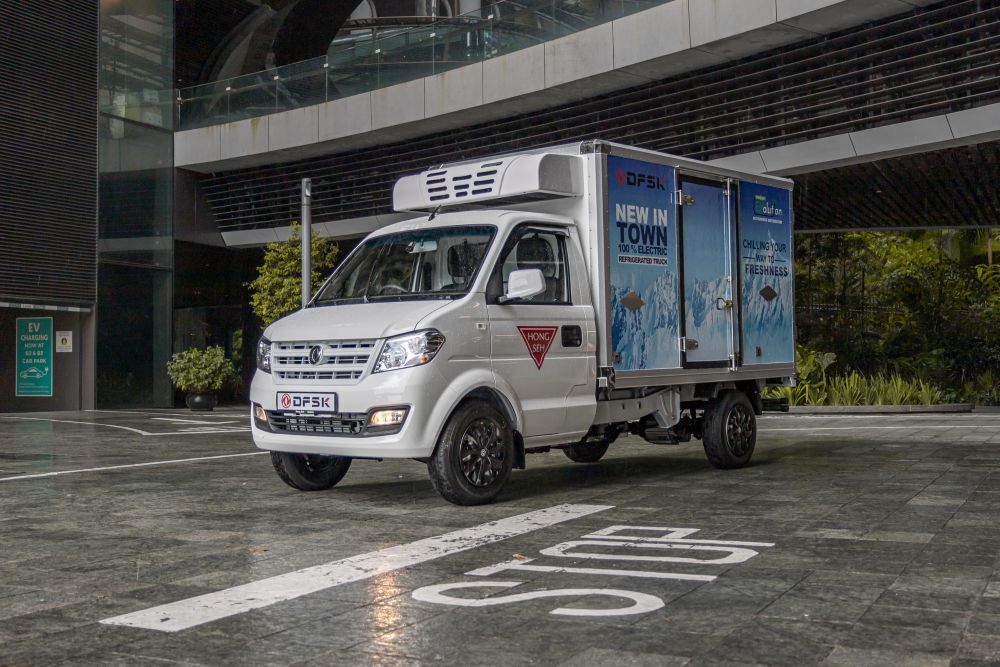
Regenerative braking can deliver returns in range, brake wear, and total operating cost on every run.
Hong Seh Motors’ electric lineup, covering both LGV cargo vans and HGV electric trucks, features regenerative braking systems designed to perform across Singapore’s urban delivery and logistics routes. Whether you run high-frequency last-mile deliveries or heavier cargo operations, transitioning your fleet to electric brings this technology directly into your daily operations.
Contact Hong Seh Motors today to arrange a test drive and see how regenerative braking performs across the load and route conditions that matter to your business.