
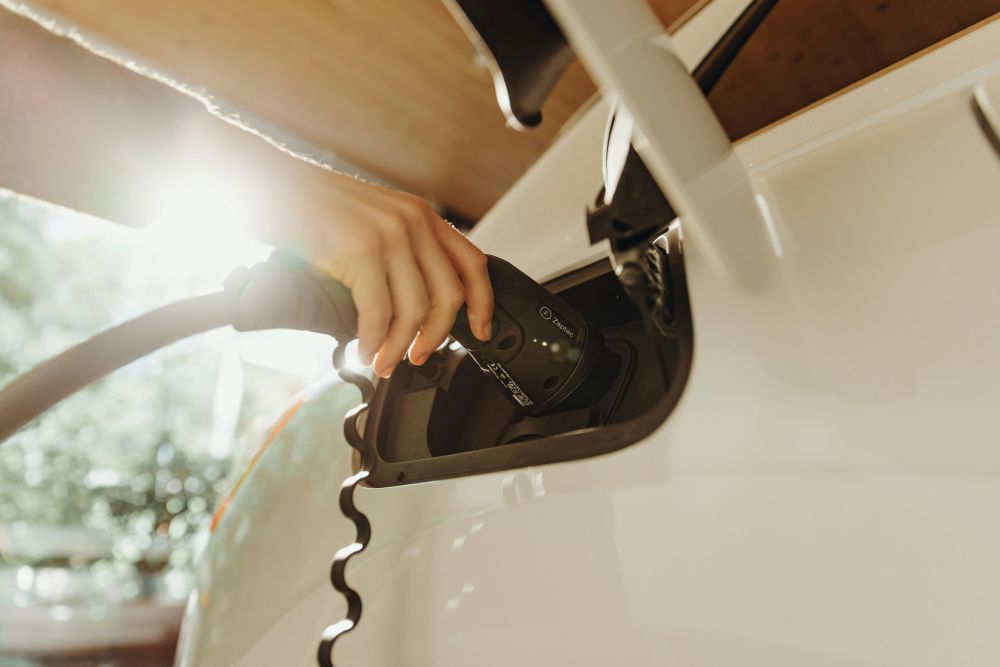
How Does EV Charging Work for Your Commercial Fleet?
Singapore’s commercial fleet electrification is accelerating faster than many operators expected. If you are integrating your first commercial electric vehicle, it’s important to learn how EV charging works, as it affects your depot infrastructure, driver scheduling, and long-term operating costs.
While charging a regular electric car can be straightforward, charging for commercial fleets is more complex. From larger battery packs that need to be charged within a schedule to wider delivery routes, many factors determine how quickly each commercial vehicle needs to top up.
What is EV Charging? The Components of the System
The unit commonly referred to as a “charger” is technically Electric Vehicle Supply Equipment (EVSE). This is a safety device that regulates the flow of electricity from the battery to the vehicle, rather than generating power itself.
What’s more, three components work together in every EV charging session:
- The Power Source: Singapore’s electrical grid delivers alternating current (AC), which is the starting point for all EV charging.
- The Connector: Plug type varies by charging speed. For example, type 2 connectors handle AC charging, while Combined Charging System (CCS) connectors handle DC fast charging. Both fall under Singapore’s TR25 standard, ensuring vehicles like the SRM T3EV and DFSK EC35 are compatible with all compliant chargers.
- The On-Board Charger: A component inside the vehicle converts AC to DC before it reaches the battery.
How Does an EV Charger Work? AC vs. DC Explained
While Level 1 charging uses a standard 230V outlet and delivers around 2 to 3 kW, for commercial electric vehicles, these charge rates are too slow for commercial use. For commercial duty cycles, the two relevant options are Level 2 AC and Level 3 DC fast charging:
AC Charging (Level 2)
AC charging supplies alternating current from a wallbox to the vehicle, where the onboard charger converts it to DC for the battery. In this mode, electric vehicle charging is slow, making it ideal for overnight sessions when vehicles are already stationary.
For an EV van like the DFSK EC35 EV or an electric lorry like the SRM T3EV, depot AC charging after a full day of urban deliveries is a natural operational fit. Besides, most light goods vehicles can reach 80% overnight from a standard wallbox.
AC chargers are also more affordable to install than DC units, and overnight sessions take advantage of Singapore’s off-peak electricity tariffs. For SMEs with a fixed yard or warehouse, this setup handles most daily charging needs without requiring complex infrastructure.
DC Fast Charging (Level 3)
DC fast charging works by moving the power conversion out of the vehicle. In this mode, the charging station converts AC from the grid to DC and delivers it directly to the battery.
This is also how a 50 kW EV charger can bring a battery from 20% to 80% in approximately 35 minutes, compared to several hours with an AC wallbox.
For the Farizon H9E, with a rated range of up to 300 km, DC fast charging is the practical solution when a mid-route top-up is needed during a long delivery day. Also, regenerative braking recovers some energy during deceleration, partially offsetting consumption on urban stop-and-go routes.
However, high-speed DC charging can generate more heat in the battery cells. Thermal management systems in modern commercial electric vehicles are designed to handle this, but it is a relevant consideration for vehicles parked in uncovered yards in Singapore’s climate.
Should You Charge Your Commercial EV to 80% or 100%?
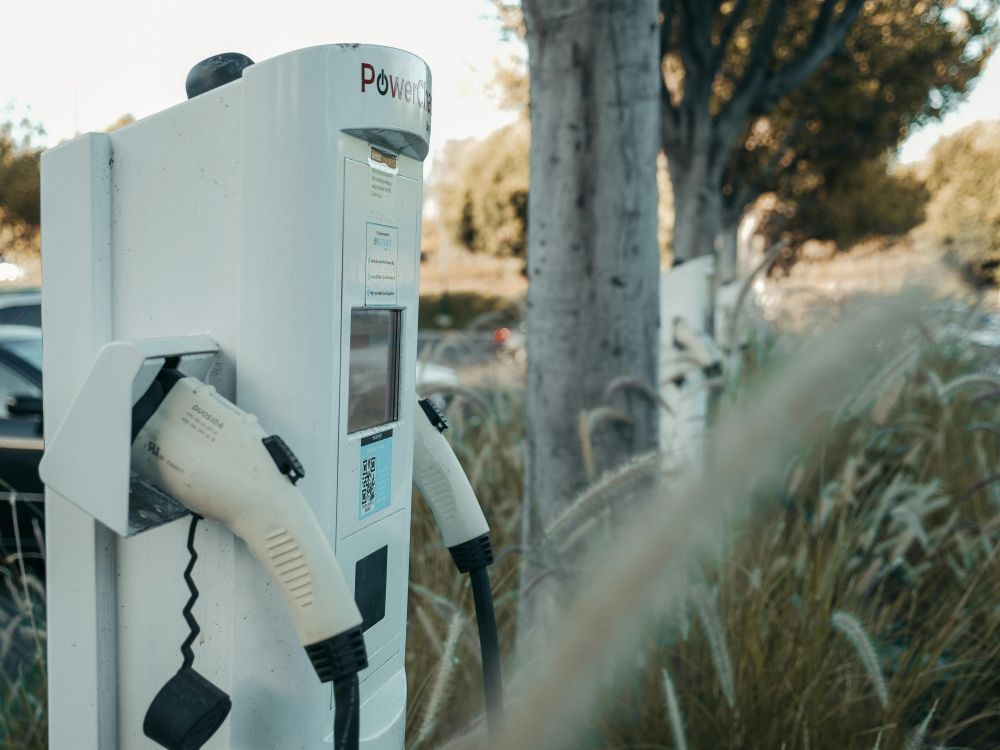
For daily logistics operations, 80% is the practical default. Lithium-ion batteries charge fastest between 20% and 80%, the range where the charging curve runs steepest.
Above 80%, speed drops to protect the cells from stress. Keeping daily charge limits here also reduces cumulative wear on the battery pack over high annual mileages.
Full charges to 100% make sense before long-haul routes, or when maximum range is needed to accommodate a heavy payload. The key is not to leave the battery at 100% for extended periods, particularly in the ambient heat.
But if you purchase your commercial electric vehicle from Hong Seh, you can rely on our lineup’s active thermal management. The system helps regulate battery temperature during fast charging and vehicle standby.
Fleet Solutions: Choosing the Right Charging Strategy
Whether you own a fleet of EV vans or trucks, the right charging strategy depends on the daily route distance and available infrastructure. For most commercial uses, you can follow these charging strategies:
1. Depot Charging
Installing private AC chargers at your warehouse or yard is the most cost-effective long-term option for SMEs. With this option, your commercial electric vehicles can charge overnight at off-peak electricity rates and return to full capacity by morning, with no driver downtime.
Additionally, a standard wallbox installation can be a simple and cost-effective solution. For fleets running predictable routes with a fixed return point each evening, depot charging eliminates dependence on public infrastructure. It also gives you direct control over energy spending and fleet management scheduling.
2. Opportunity Charging
Singapore’s public DC fast charging network spans HDB multi-story car parks, industrial estates, and key logistics hubs. And with opportunity charging, you can plug your commercial electric vehicle during natural breaks: loading stops, driver meal breaks, or scheduled holding periods.
For instance, a 30-minute DC top-up can extend operational range without disrupting delivery schedules. This approach works particularly well for heavy-duty commercial electric vehicles with fast-charging capability, such as the Farizon H9E, on routes that push beyond a single-charge range.
3. Leveraging Telematics
Commercial fleet telematics platforms monitor State of Charge (SoC) across every electric vehicle in real time, giving operations managers a live picture of which vehicles need charging and when. This prevents charge and range anxiety by triggering alerts before a vehicle drops below a set threshold.
Smart route optimization tools also use SoC data to assign deliveries to vehicles with sufficient charge. Consequently, you can reduce unplanned stops and keep daily schedules on track across the full range of delivery vehicle types in your fleet.
Maximizing Uptime with Hong Seh Motors’ Electric Lineup
Hong Seh Motors supports businesses through vehicle selection and the accompanying charging infrastructure planning. Before committing to a fleet, you can consult on which charger specifications match your vehicles and usage patterns.
To make the decision easier for you, consider the following commercial electric vehicles from Hong Seh:
- SRM T3EV: DC fast-charging capable, from 20% to 80% in approximately 35 minutes. Built for high-turnover urban logistics where short turnaround windows are non-negotiable.
- DFSK EC35: A versatile EV van with a charging port compatible with Singapore’s full AC and DC public network, practical for both depot and on-road charging scenarios.
- Farizon H9E: Designed for heavy-duty commercial applications, with battery capacity built for extended range and DC fast charging capability for mid-day top-ups on long routes.
The Charging Decision That Future-Proofs Your Fleet
The charging infrastructure in Singapore is scaling quickly, keeping the country on track for 60,000 public units by 2030. For fleet operators, the practical question is no longer whether to electrify but how to build a charging system and strategy that aligns with existing public infrastructure to support daily operations from the moment the first vehicle arrives.
Contact Hong Seh Motors for a consultation on commercial electric vehicle selection and charging infrastructure to help future-proof your business.
Comments are closed