
Mastering Last-Mile Delivery Optimization
In Singapore’s high-density urban landscape, last-mile delivery plays a crucial role in maintaining brand reliability and operational efficiency. As customer expectations shift toward sub-24-hour fulfillment, any friction in the final leg of the supply chain risks compromising your reputation.
To achieve efficient last-mile deliveries, businesses must adopt a multi-faceted approach. This includes implementing route optimization to navigate peak-hour traffic, utilizing data analytics to resolve bottlenecks, and transitioning toward an electric commercial fleet to align with the government’s sustainability goals.
By refining these logistics touchpoints, businesses can reduce high shipping costs while ensuring a seamless experience that keeps your customers coming back.
What is Last-Mile Delivery?
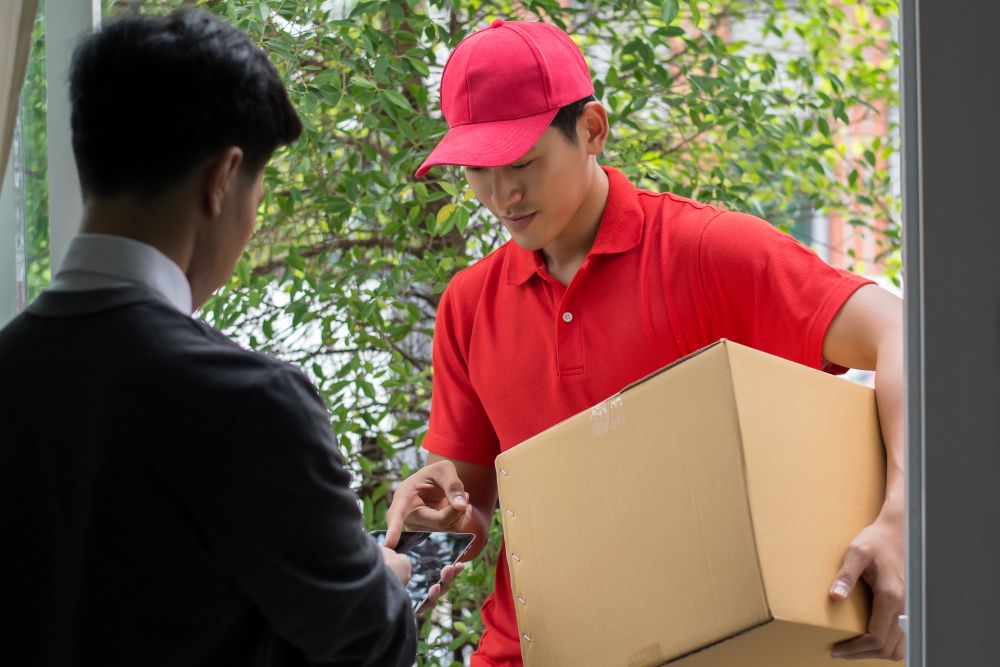
In logistics, last-mile delivery refers to the final leg of a product’s journey, where goods are transported from a distribution center or local hub directly to the end customer’s doorstep. While it’s often the shortest distance covered, it’s still the most critical touchpoint between a business and its consumers.
For companies managing e-commerce, retail, or on-demand services, achieving efficient last-mile deliveries is essential for maintaining a competitive edge. Since delivery speed and reliability can be determinants of brand loyalty, this phase directly influences customer satisfaction.
When you prioritize last-mile optimization, you can reduce the high operational costs typically associated with this complex stage while ensuring a seamless experience for every recipient.
Challenges in Last-Mile Delivery
The final leg of the logistics chain in a high-density urban environment presents a unique set of logistical hurdles. These obstacles often strain resources and prevent efficient last-mile deliveries:
1. Limited Vehicle Range and Refueling Downtime
For many operators, the fear that a vehicle will run out of fuel or charge mid-route can be a concern. Traditional internal combustion engines require frequent trips to the petrol station, while an early-generation EV van might face range anxiety without a strategic charging plan.
This potential for downtime disrupts the delivery flow, forcing fleet managers to limit route lengths and reduce the overall volume of goods processed in a single shift.
2. Traffic Congestion and Schedule Delays
Singapore’s busy urban centers are prone to peak-hour gridlock and unpredictable road conditions. With traffic congestion directly hampering the ability to meet strict delivery windows, there can be missed slots and frustrated customers.
When vehicles are stuck in traffic, the entire last-mile optimization strategy falters, as drivers spend more time idling than moving. Consequently, fleet managers experience further complications in coordinating same-day or time-sensitive shipments.
3. Inefficient Route Planning
Relying on static or manual dispatching fails to account for the mathematical complexity of numerous stops. Inefficient routing also leads to “out-of-route” miles or extra distance driven due to poor sequencing, which increases vehicle wear and tear.
This lack of last-mile delivery route optimization means drivers may backtrack across the same neighborhoods, wasting precious time and reducing the number of successful drop-offs per day.
4. High Operational Costs
The final mile can be expensive, with high costs typically driven by rising fuel and labor costs, as well as the sheer inefficiency of fragmented deliveries. When a business fails in last-mile route optimization or vehicle usage, these expenses spiral, leaving thin margins that make it challenging to offer the “free shipping” that many modern Singaporean consumers now expect.
5. Lack of Real-Time Visibility
Another major pain point for both businesses and customers is the “black hole” that occurs once a package leaves the warehouse. Without efficient, real-time tracking and visibility, managers cannot adjust to on-field disruptions, and customers are left in the dark regarding their last-mile delivery status.
The transparency gap often leads to increased inquiries and a higher rate of failed first-time deliveries because recipients are not home to receive their orders.
6. High Emissions and Regulatory Pressure
Logistics companies are now facing pressure to align their operations with the Singapore Green Plan 2030. Traditional fleets must now comply with stricter environmental regulations and emission standards.
Besides, choosing older, high-emission vehicles over EV vans or trucks risks alienating eco-conscious clients who prioritize sustainability throughout their entire supply chain.
How to Improve Your Business’s Last-Mile Delivery
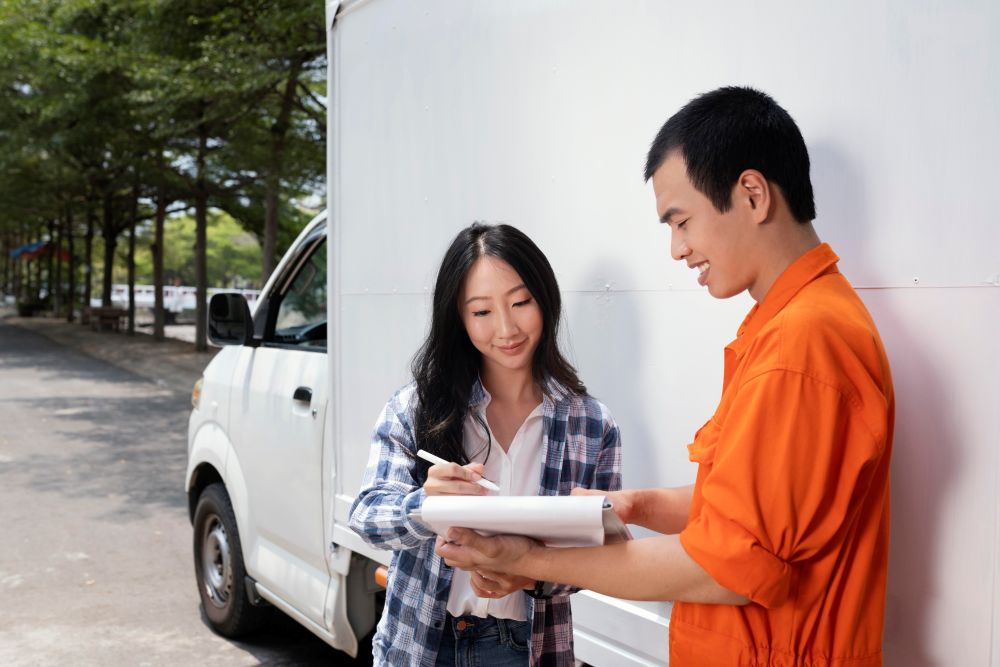
To overcome the logistical hurdles of the last-mile deliveries, you can implement these efficient solutions:
1. Plan Efficient Delivery Routes
Utilizing advanced software for last-mile delivery route optimization allows you to sequence stops logically based on real-time traffic and driver availability. This reduces “empty miles” and ensures more packages reach their destinations on time without unnecessary fuel waste.
2. Offer Smart Lockers or Pickup Points
Providing self-collection options through smart lockers or designated pickup points minimizes failed last-mile delivery attempts. With this efficient approach, customers enjoy the flexibility of retrieving their parcels at their convenience, while your fleet benefits from consolidated drop-offs at a single secure location.
3. Utilize Data Analytics for Performance Insights
Analyzing historical delivery data helps you identify performance bottlenecks and peak periods. By leveraging these insights, you can make data-driven decisions for last-mile optimization and long-term growth.
4. Choose the Right Vehicle Type
Matching your vehicle to the specific delivery volume and route distance is essential for maintaining high efficiency. To ensure efficient last-mile deliveries, consider these electric goods vehicles:
- DFSK EC35: A compact, reliable EV van with a 1,100 kg payload, perfect for agile urban parcel deliveries.
- DFSK EC31 and EC31 Freezer Truck: Versatile options for general goods or temperature-sensitive products like food and medicine.
- SRM T3EV: An EV truck offering high performance and durability for diverse logistics needs.
- LEVC VN5: A premium van with a range-extender, ideal for long-distance routes where zero-emission capability is still a priority.
5. Optimize Fleet Size and Allocation
Balance your delivery demand with operational costs by right-sizing your fleet. Effective allocation ensures that your electric vehicles are fully utilized during peak hours when delivering goods.
6. Train Drivers for Navigation and Service
Invest in comprehensive training programs that focus on efficient last-mile delivery and customer service standards. Drivers who are skilled at using route optimization tools and handling customer interactions professionally represent your brand’s commitment to quality.
7. Adopt Electric Vehicles for Compliance
Transitioning to an EV van or truck is a forward-looking strategy for cost savings and regulatory compliance. Beyond lower energy expenses, these vehicles ensure your business meets Singapore’s 2030 sustainability goals while accessing government green incentives.
8. Partner with Reliable Vehicle Providers
Collaborating with a dependable vehicle provider ensures your fleet remains in peak condition. With a partner that offers high-quality commercial vehicles and consistent after-sales support, you can maintain the uptime required for efficient last-mile deliveries.
Drive Towards Excellence in Last-Mile Logistics
By refining your delivery routes and integrating smarter logistics solutions, you can enhance customer satisfaction, improve operational efficiency, and drive down overhead costs.
However, always remember that a sustainable, well-equipped fleet is the core of these logistics improvements. As the country moves toward a greener future, choosing the right partners and vehicles will define your long-term success.
Explore Hong Seh Motors’ extensive range of electric goods vehicles today to build a future-proof delivery fleet that keeps your business moving forward.
Comments are closed