
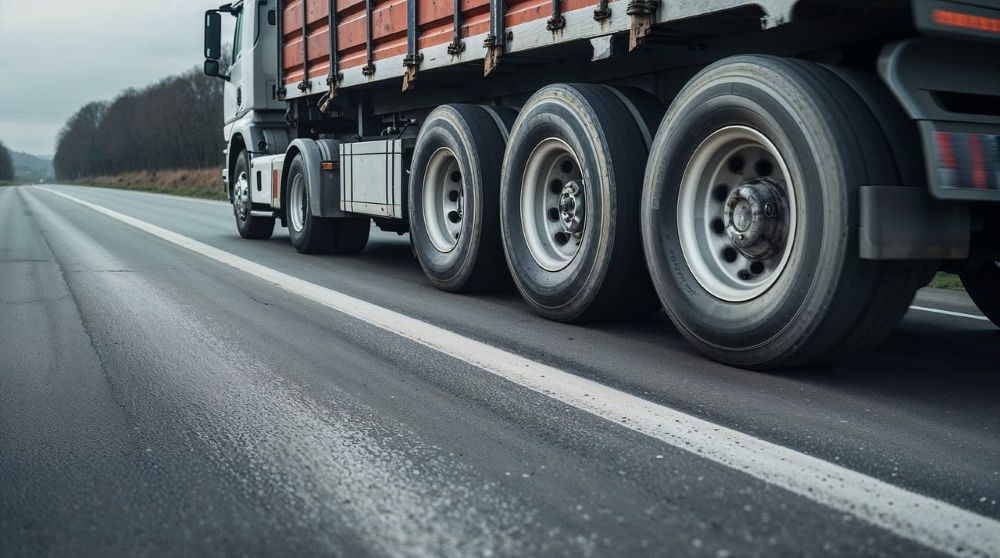
Transitioning to an electric fleet often prompts a critical question from many commercial operators: can these vehicles handle the same heavy towing demands as diesel trucks?
Knowing your vehicle’s towing capacity, it determines the maximum weight your electric vehicle can safely pull.
As a fleet manager, you need to get this figure right, as it can make the difference between a smooth haul and a costly compliance issue.
What Does Towing Capacity Mean?
Towing capacity refers to the maximum load a vehicle is engineered to safely pull. For commercial fleet operators, these are the key terms to know:
- Braked vs. Unbraked Towing: An unbraked trailer relies entirely on the towing vehicle’s braking system, so it carries a lower weight limit. A braked trailer, on the other hand, has its own braking system, allowing for a higher towing capacity.
- Gross Combined Weight Rating (GCWR): This is the absolute maximum weight of your fully loaded EV plus the fully loaded trailer combined.
- Maximum Towable Mass: Manufacturers calculate this metric based on chassis strength, motor torque, and cooling capacity.
- Tongue Weight: This is the downward pressure the trailer exerts on the hitch. So, always factor it into your payload calculations to avoid overloading.
Towing Capacity vs. Payload Capacity: Their Distinct Meanings
When comparing towing and payload capacity, the key distinction comes down to weight placement:
- Payload Capacity: The weight carried on the vehicle itself, including drivers, passengers, and cargo loaded in the bed or cabin.
- Towing Capacity: The weight pulled behind the vehicle. Because trailer axles bear the bulk of a trailer’s weight, towing limits are generally much higher than payload limits.
However, the two figures are interdependent. Every kilogram added to your vehicle’s payload reduces your available towing capacity by the same amount.
To stay within the GCWR, you must account for both payload and towing capacity figures, not separately, before every haul.
The Impact of Towing on Electric Fleet Management
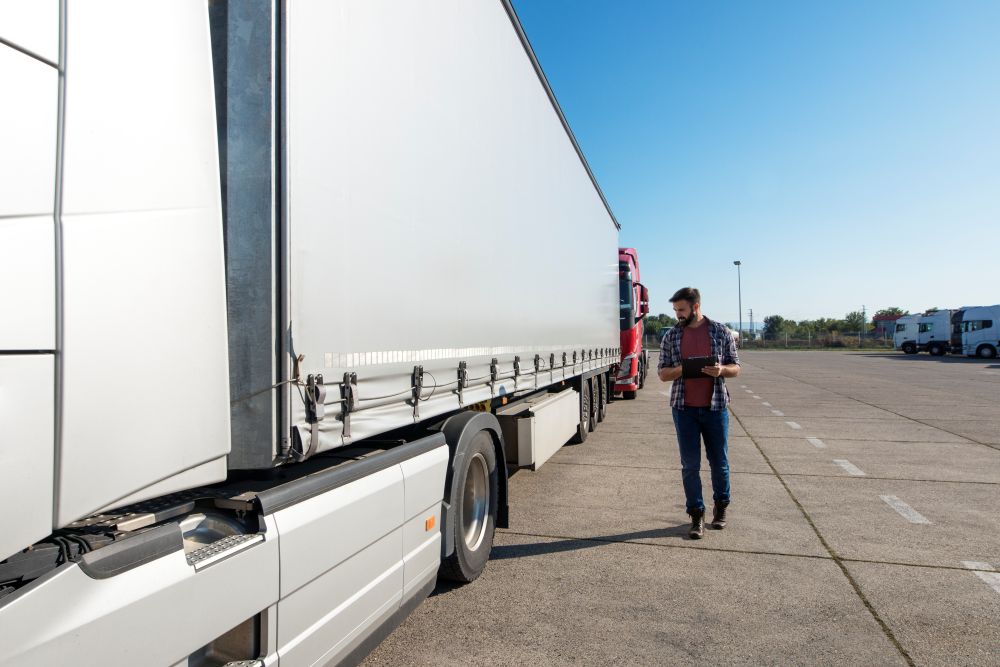
One advantage of electric trucks is their ability to deliver torque instantaneously. Unlike diesel engines, which need to build power over a rev range, electric motors deliver maximum pulling force from 0 RPM. This makes hill starts with heavy trailers noticeably smoother and more controlled.
That said, towing does come with an energy trade-off. Increased aerodynamic drag and added weight can reduce an EV’s driving range by 30 to 50%. Therefore, route planning becomes especially important, especially when you’re optimizing last-mile delivery for your commercial fleet.
On the other hand, regenerative braking partially offsets this cost. The extra momentum of a loaded trailer during downhill descents allows the motor to recover energy more effectively, feeding charge back into the battery.
Singapore’s Regulatory Landscape for Towing
Before towing with any electric vehicle in Singapore, check the official website of the Land Transport Authority (LTA) and ensure full compliance with the requirements. These requirements cover trailer lighting, overall dimensions, and for heavy goods vehicles (HGVs) with a maximum laden weight (MLW) above 12,000kg, the mandatory installation of speed limiters.
Depending on the combined weight of the EV and trailer, drivers may require a Class 4 or Class 5 license. So, verify your team’s licensing before assigning towing duties.
Additionally, all tow hitches must be LTA-approved, and the vehicle’s unladen weight must be sufficient to maintain safe control of the trailer under load.
How to Calculate Your “Real-World” Towing Capacity
Knowing what the towing capacity on paper is one thing, but calculating your actual safe limit in real-world conditions is another. Follow these steps to get an accurate figure:
- Start with the manufacturer’s GCWR, as this is your absolute upper limit.
- Subtract the Curb Weight of your EV, which is the vehicle’s weight without passengers or cargo.
- Subtract the Payload Weight, including the driver, passengers, and any cargo loaded inside the van or truck.
- The remaining figure is your actual safe towing capacity.
Also, consider aerodynamics. A tall, boxy trailer creates significantly more drag than a flatbed trailer of the same weight, so expect a greater impact on your EV’s range.
Choosing the Right Electric Partner: Hong Seh Motors
For demanding commercial applications, Hong Seh Motors offers electric trucks purpose-built for demanding commercial tasks. Models like the Farizon H9E and SRM T3EV feature industrial-grade frames that provide a stable, robust foundation for towing operations. These vehicles are designed to handle the stresses of regular heavy-haul work without compromising on efficiency.
That said, selecting the right electric vehicle for your needs goes beyond reading a spec sheet. Towing requirements vary significantly across industries, and matching the right torque profile to your specific operational needs requires expert guidance.
Speak with a Hong Seh Motors consultant to ensure your fleet is equipped with the right vehicle for the job from day one.
Tow Smarter, Not Harder, With the Right Electric Fleet
Knowing a vehicle’s towing capacity is crucial in balancing pulling power with operational efficiency. For short-range heavy hauls, electric towing is already more cost-effective than diesel, with lower electricity costs and reduced maintenance expenses adding up significantly over time.
Whether you’re starting a cargo delivery van business or transitioning your diesel trucks to electric goods vehicles, explore our full range of high-torque solutions built for Singapore’s demanding logistics environment.
Contact Hong Seh Motors today for a live demonstration of how our electric trucks can handle heavy loads.
Comments are closed