
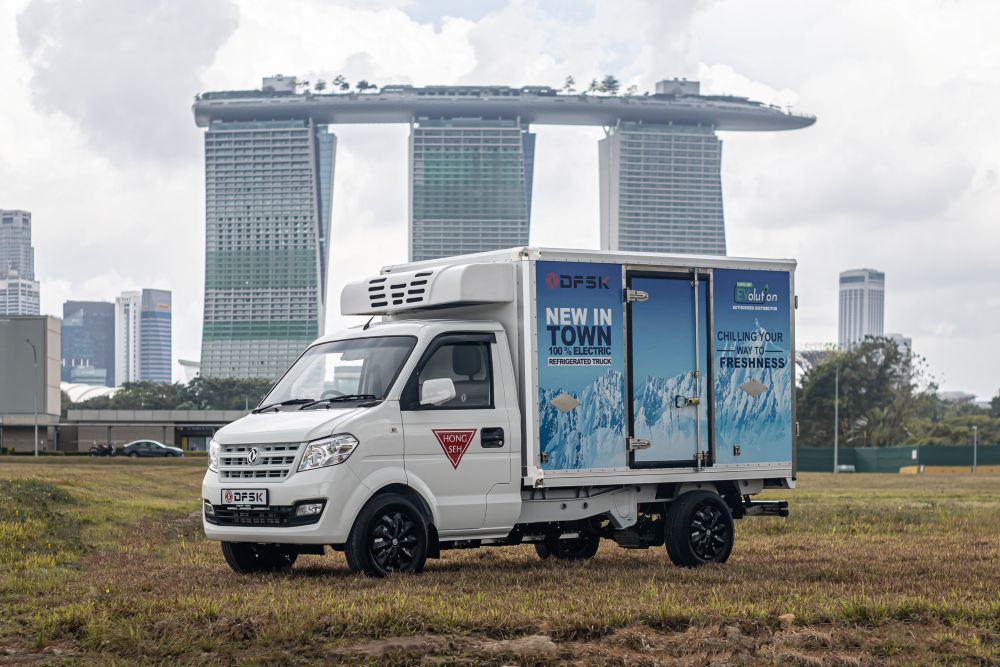
What are Electric Refrigerated Trucks? Guide for Food and Cold-Chain Businesses
Cold-chain and food distribution businesses in Singapore depend on refrigerated trucks to maintain the integrity of temperature-sensitive goods from collection to delivery.
As more and more commercial fleets shift toward electrification, you might ask whether electric refrigerated trucks can match the reliability of diesel reefer trucks. To get the answer right, you need to learn the technology behind these vehicles.
By looking at the features of an electric truck like the DFSK EC31, you’ll also discover how a future-forward vehicle can optimize your food distribution and cold-chain logistics operations.
What are Refrigerated Trucks?
A refrigerated truck is a commercial vehicle fitted with an insulated cargo box and a refrigeration unit. The unit holds a set temperature throughout the delivery run. Because it’s not designed to cool warm goods during transit, products must be pre-chilled or pre-frozen before loading.
The terms ‘freezer truck’, ‘chiller truck’, ‘reefer truck’, and ‘cold truck’ are used interchangeably across the industry. But refrigerated trucks are distinct from refrigerated vans. While freezer trucks handle larger cargo volumes, refrigerated vans suit smaller loads and high-frequency urban delivery cycles.
Electric refrigerated trucks are also available in Singapore. They combine a battery-powered electric drivetrain with an electric refrigeration unit, maintaining cold chain integrity with zero tailpipe emissions and no diesel-driven compressor.
Top Industries that Use Refrigerated Trucks
Temperature-controlled transport operates across several sectors in Singapore:
- Food and Beverage (F&B) Distribution: F&B is the largest user segment for refrigerated trucks in Singapore, covering fresh produce, chilled ready meals, dairy products, and catering supplies delivered to supermarkets, restaurants, and corporate canteens.
- Pharmaceutical and Medical Supply: Vaccines, biological samples, and temperature-sensitive medications require consistent cold-chain handling from distribution center to clinic or hospital.
- Cold-Chain Logistics Providers: Third-party logistics (3PL) operators managing temperature-controlled freight on behalf of multiple clients make up a major commercial segment, often running mixed cargo across sectors on the same route.
- Grocery and Convenience Retail Replenishment: Supermarket chains and convenience store operators run fixed, high-frequency refrigerated delivery routes to replenish chilled and frozen goods across their retail networks.
How Does an Electric Refrigerated Truck Work?
The cooling principle of an electric refrigerated truck involves:
- Insulated Box and Active Cooling: The cargo box maintains temperature through high-grade insulation, while the refrigeration system draws electric power from the vehicle’s battery to run the cooling cycle, replacing the diesel-driven compressor entirely.
- Pre-Cooling Before Loading: Pre-cooling the cargo space and loading goods that are already at the correct temperature are standard cold-chain practices. On an electric refrigerated truck, loading warm goods forces the refrigeration unit to compensate for the excess heat, drawing more power from the drive battery and reducing the range available for the rest of the route.
- Electric Power Take-Off (EPTO): Some electric commercial vehicles use an EPTO system to power the refrigeration unit from a dedicated auxiliary battery, operating independently of the main drive battery. This gives operators more flexibility in managing refrigeration load against available driving range on longer or higher-stop routes.
What are the Benefits of Switching to an Electric Refrigerated Truck?
When you switch to an electric refrigerated truck, you can expect:
- Lower Operating Costs: Electric trucks eliminate diesel fuel costs for both the drivetrain and the refrigeration unit. They also require less routine maintenance because they have fewer moving parts in the powertrain.
- Reduced Emissions: Zero tailpipe emissions support your sustainability commitments and align with Singapore’s push toward cleaner commercial fleets under the Green Plan 2030.
- Quieter Operation: Electric drivetrains and electric refrigeration units run far more quietly than diesel equivalents. This is a practical advantage for early-morning or residential deliveries, where keeping noise levels down matters.
- Regulatory Readiness: Until 31 March 2027, light commercial electric vehicles qualify under Band A of the Land Transport Authority’s (LTA) Commercial Vehicle Emissions Scheme (CVES). Transitioning now rewards you with government incentives while positioning you ahead of Singapore’s ongoing shift toward cleaner commercial vehicles.
What are the Challenges of Electrifying a Refrigerated Truck Fleet?
While you can get several benefits from electric refrigerated trucks, you also need to prepare for these challenges:
- Refrigeration Draw on Battery Range: Running a refrigeration unit continuously draws additional power from the drive battery. Factor this load into your daily route planning before specifying the vehicle.
- Frequent Door Openings: Cold-chain delivery routes typically involve multiple stops with repeated door openings. Each opening can cause heat gain, forcing the refrigeration unit to work harder and use more energy. To manage this, match the refrigeration system’s cooling capacity to your route’s stop frequency before committing to a vehicle.
- Upfront Investment: Electric refrigerated trucks carry a higher purchase price than diesel equivalents. But the LTA’s CVES Band A incentive of up to S$15,000 can reduce the upfront gap, and lower fuel and maintenance costs over the vehicle’s lifetime can improve the total cost of ownership.
What to Consider Before Choosing an Electric Refrigerated Truck?
Consider these factors before committing to a specific electric refrigerated truck:
- Box Size and Cargo Volume: Match the cargo box to actual load volume per trip, since an oversized box adds unnecessary unladen weight that affects driving range on an electric vehicle.
- Refrigeration System Power: Match cooling capacity to the temperature sensitivity of the goods being transported. High-stop routes with frequent door openings, or cargo with tight temperature tolerances such as vaccines and chilled pharmaceuticals, require a more powerful system.
- Box Material Quality: Higher-grade insulation reduces energy draw from the refrigeration unit over the vehicle’s operating life. Fiber-reinforced plastic (FRP) construction, such as that used in the DFSK EC31 Freezer Truck, is also 40% lighter than traditional metal bodies and resistant to corrosion in Singapore’s humid environment.
- Food Safety Compliance: The Singapore Food Agency’s (SFA) requirements apply regardless of powertrain. The cargo box must meet food-grade construction standards, and you must have compliance documentation in place before you use the vehicle.
Servicing an Electric Refrigerated Truck: What Operators Should Know
An electric refrigerated truck has two systems on separate maintenance schedules:
- Electric Drivetrain: This follows a standard EV service schedule and is the system most fleet managers already account for in their maintenance planning.
- Refrigeration Unit: The refrigeration system requires its own servicing schedule, and neglect here becomes evident in daily operations. The most common sign is slow temperature pull-down or failure to reach the set temperature mid-run.
Hong Seh’s in-house workshop and EV-certified technicians cover both systems under one roof, removing the complexity of coordinating separate providers for the drivetrain and the refrigeration unit.
The DFSK EC31 Freezer Truck: Hong Seh’s Electric Option for Cold-Chain Operators
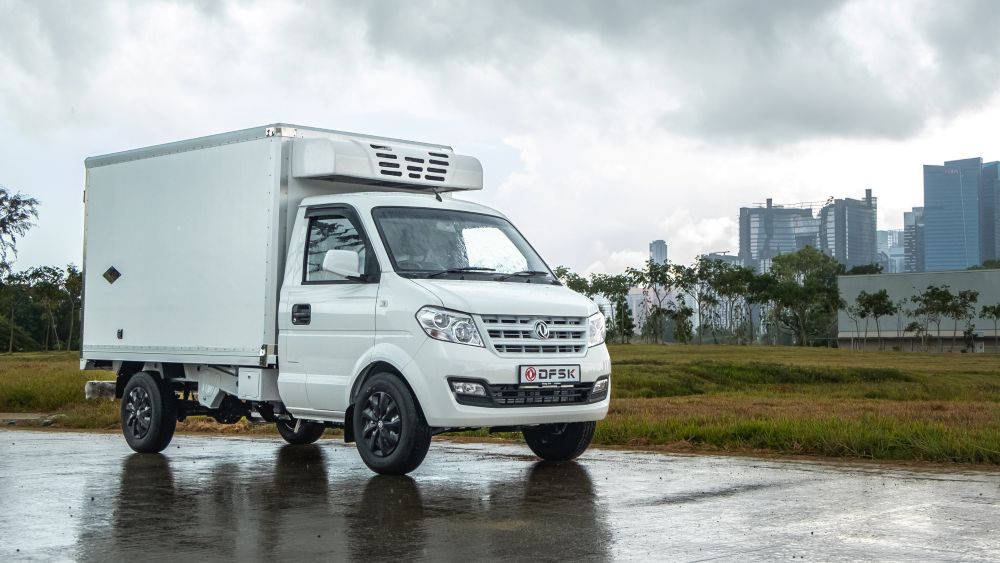
Whether you’re in the F&B or pharmaceutical industry, the DFSK EC31 Freezer Truck has all the features to ensure efficient cold chain logistics:
- Energy Consumption Efficiency: The freezer unit draws less than 2.5 kW/h, keeping energy demand manageable across a full urban delivery shift.
- AC and DC Charging Compatibility: Both AC and DC charging are supported, giving you flexibility across Singapore’s expanding commercial electric vehicle charging network.
- Cargo Volume: The FRP cargo box provides 6 m³ of cargo space, suited to standard cold-chain delivery volumes without requiring a step up to a heavier vehicle class.
- In-House Servicing: Hong Seh’s in-house workshop can handle post-sale support for both the drivetrain and refrigeration unit through EV-certified technicians.
Opt for a Reliable Electric Refrigerated Truck
Electric refrigerated trucks are a practical option for your cold chain operations. The underlying technology is proven, and the incentive under LTA’s current schemes can reduce the upfront cost.
To maximize the benefits of the truck, match the box size, refrigeration system power, and battery range to your daily delivery routes and cargo. And if you need assistance in choosing the ideal electric goods vehicle, turn to Hong Seh Motors and let our team help you determine if the DFSK EC31 Freezer Truck is right for you.
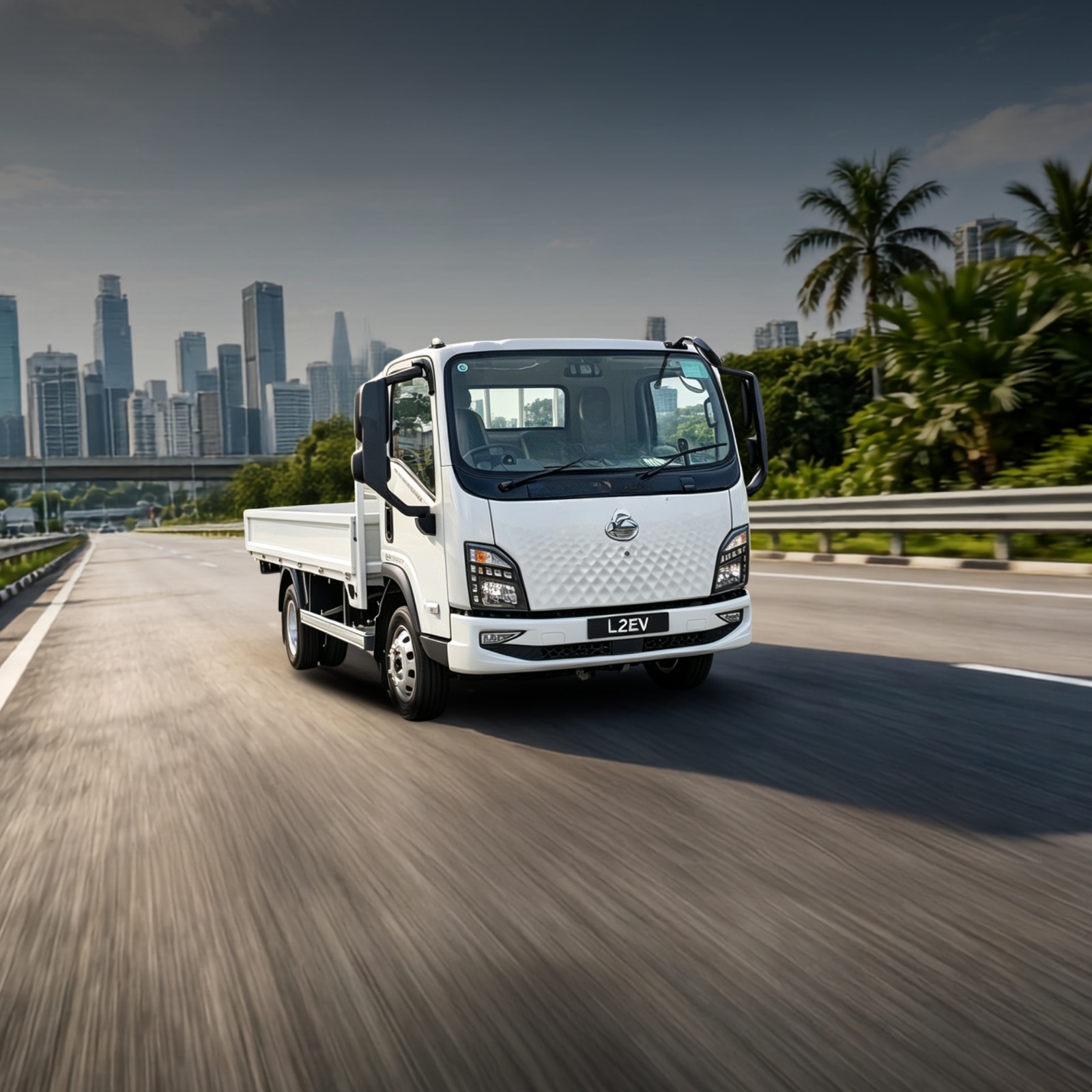
If you’re transporting other goods by land, consider the Farizon V7E van for general and high-value dry cargo runs, and the Chenglong L2 EV for a step up in deck length.
Contact our team today for a comprehensive fleet consultation.
Comments are closed